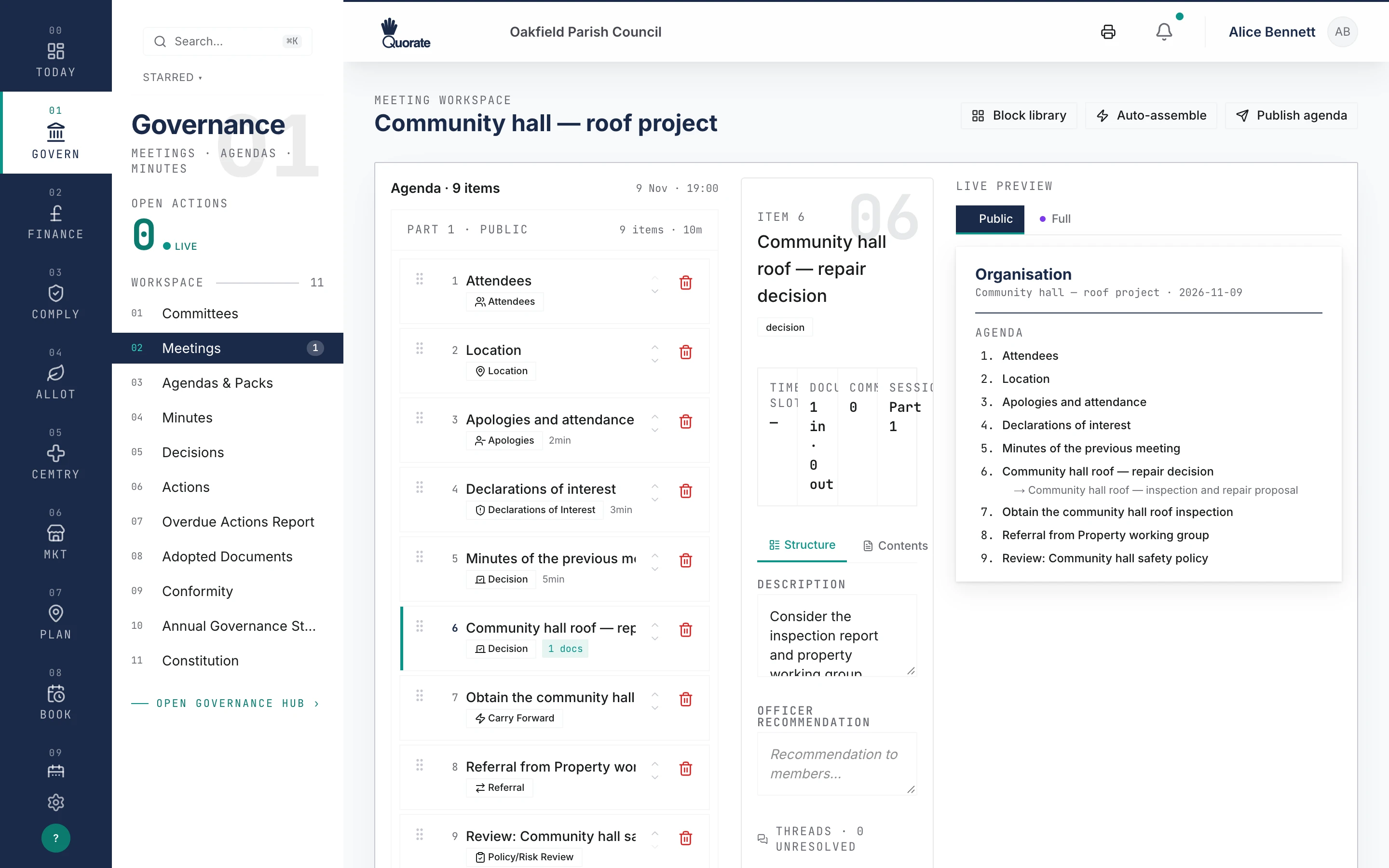
Meeting papers, assembled
Attach reports to agenda items with page ranges and rotation, mark Part 2, and generate the pack with a cover page, contents and page numbers. The public pack leaves Part 2 out automatically.
For parish and town councils
30-day free trial · No card · Unlimited councillors
The hall needs a new roof. There is a committee recommendation to consider, papers for councillors and a decision to make. Quorate keeps that business connected, so the clerk can carry it through Full Council without rebuilding the record at every stage.
Follow Oakfield Parish Council, a fictional demonstration organisation, through one connected piece of council business.
The clerk assembles the agenda from the meeting template and recorded business: eligible outstanding actions, committee referrals and policy or risk reviews due. Each source gives the next meeting a starting point. The clerk checks the items, adds the papers and chooses when to publish.
The councillor opens the meeting in the member portal, checks the agenda and reads the supporting papers. Personal notes stay against the item for their own preparation. On a phone, the same portal keeps the meeting and their actions within reach.
Pack readiness is shown in the portal; a download is available when the file is ready. Access to confidential papers follows the member’s permissions.
Explore the member portal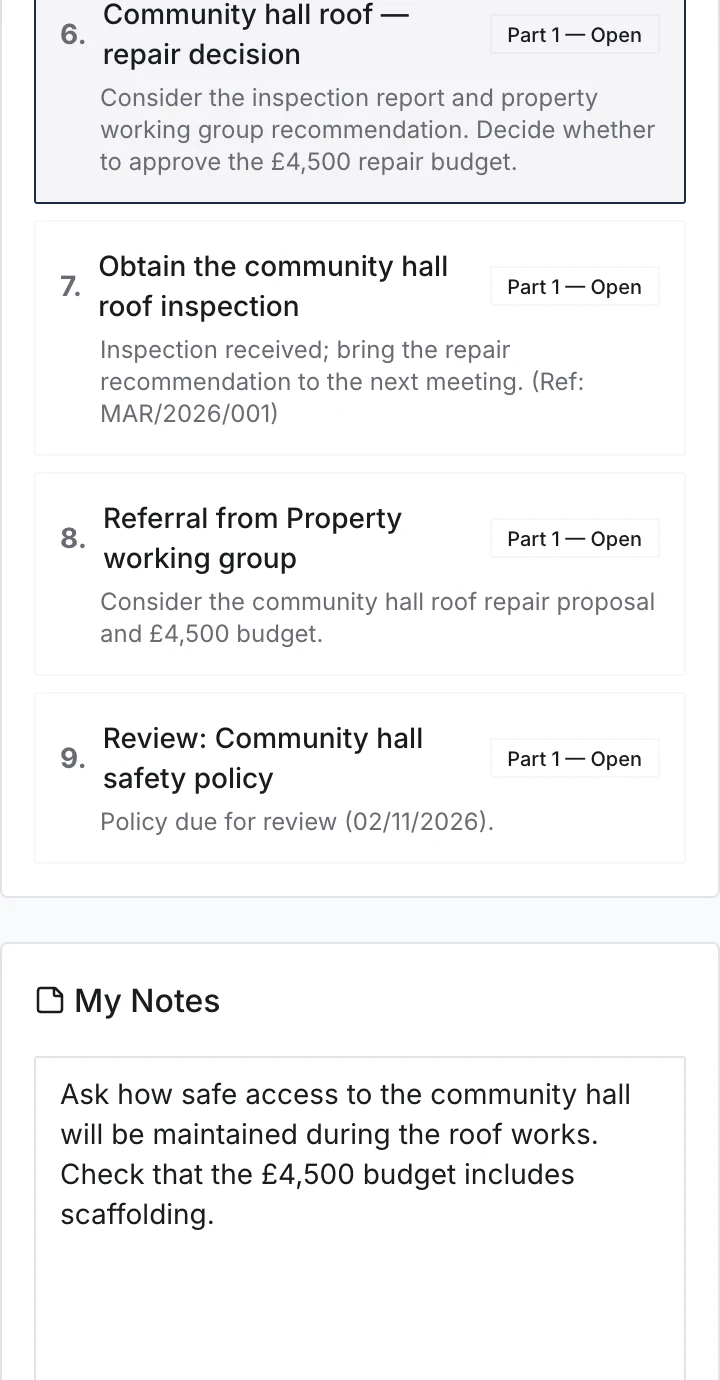
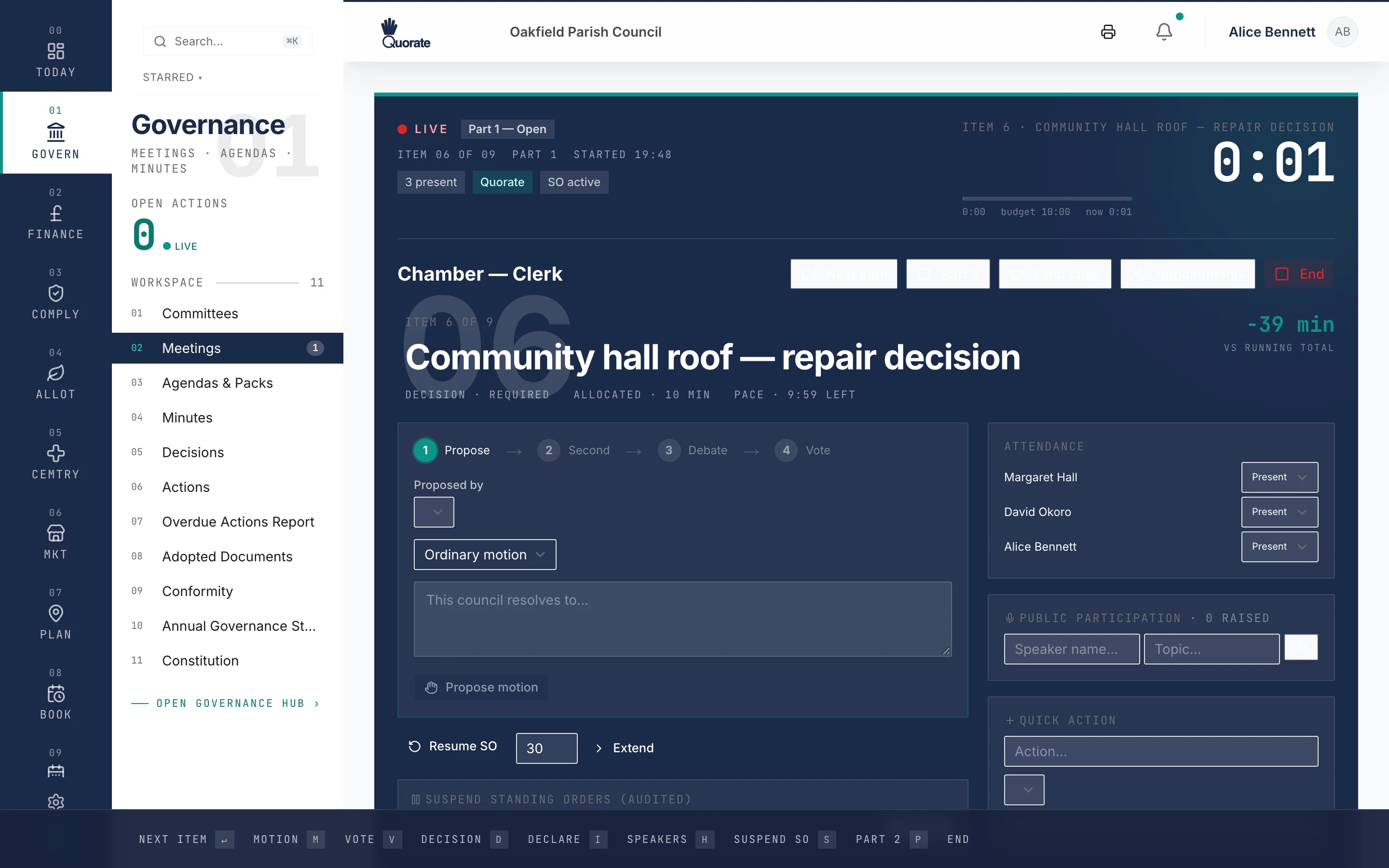
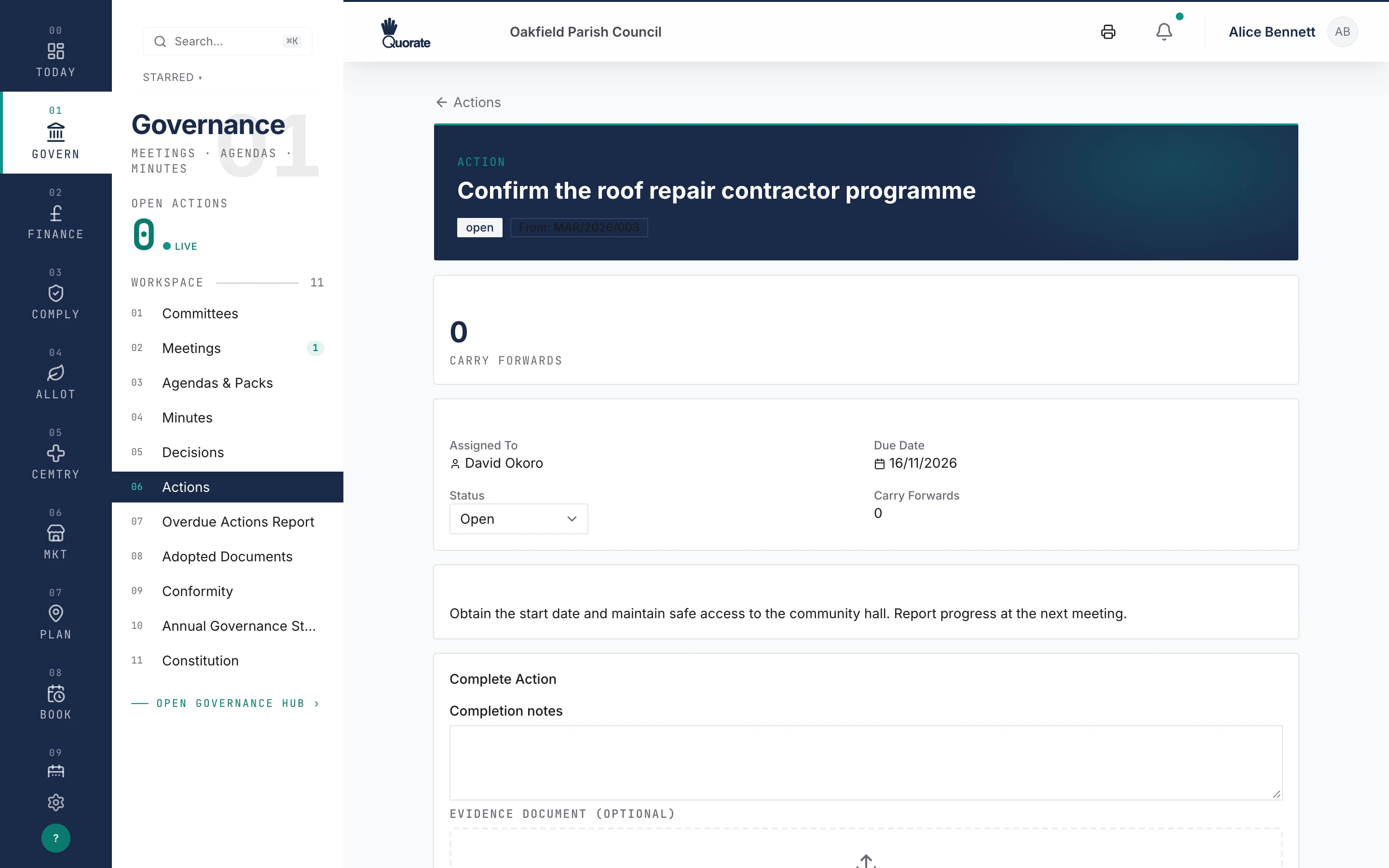
During Full Council, the clerk records the motion, declarations, votes and decision against the hall item. Configured quorum and voting checks sit in the meeting context. An action gives the agreed next step an owner and a due date, linked to the decision that explains it.
People record the meeting. Quorate provides the configured checks and the recorded basis for the decision.
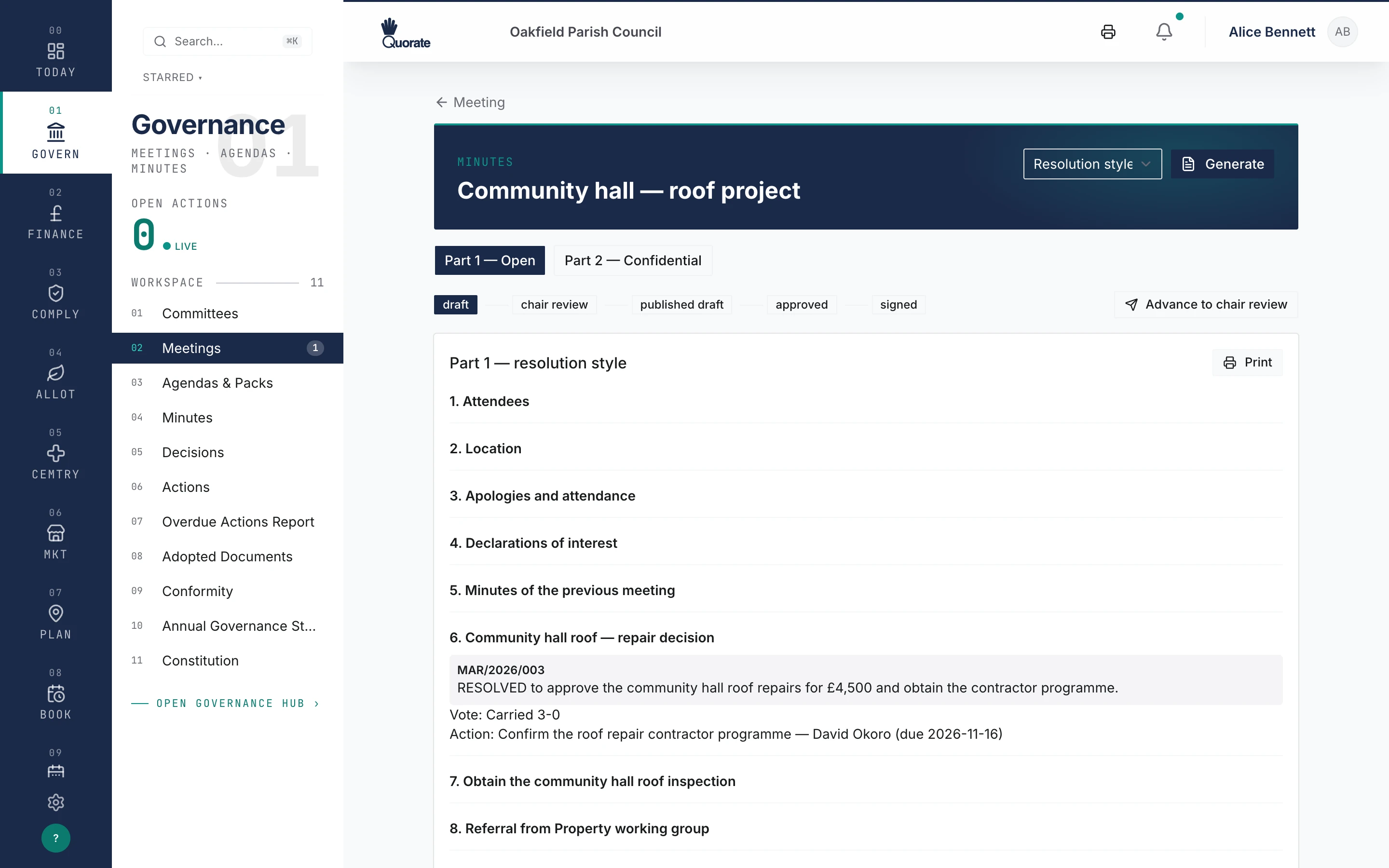
Recorded decisions, votes, declarations and item-linked actions feed the draft minutes. The clerk adds the account of the discussion and checks the wording. Chair review, publication, approval and signing remain explicit stages of the council’s record.
The draft reflects the entries people make. It does not transcribe the discussion or supply facts that were never recorded.
How the minutes record worksThe public portal shows the permitted published Part 1 agenda and minutes. A published draft is labelled as a draft; approval is a separate step. Residents can follow the council’s recorded business while confidential material and councillors’ personal notes stay outside that public view.
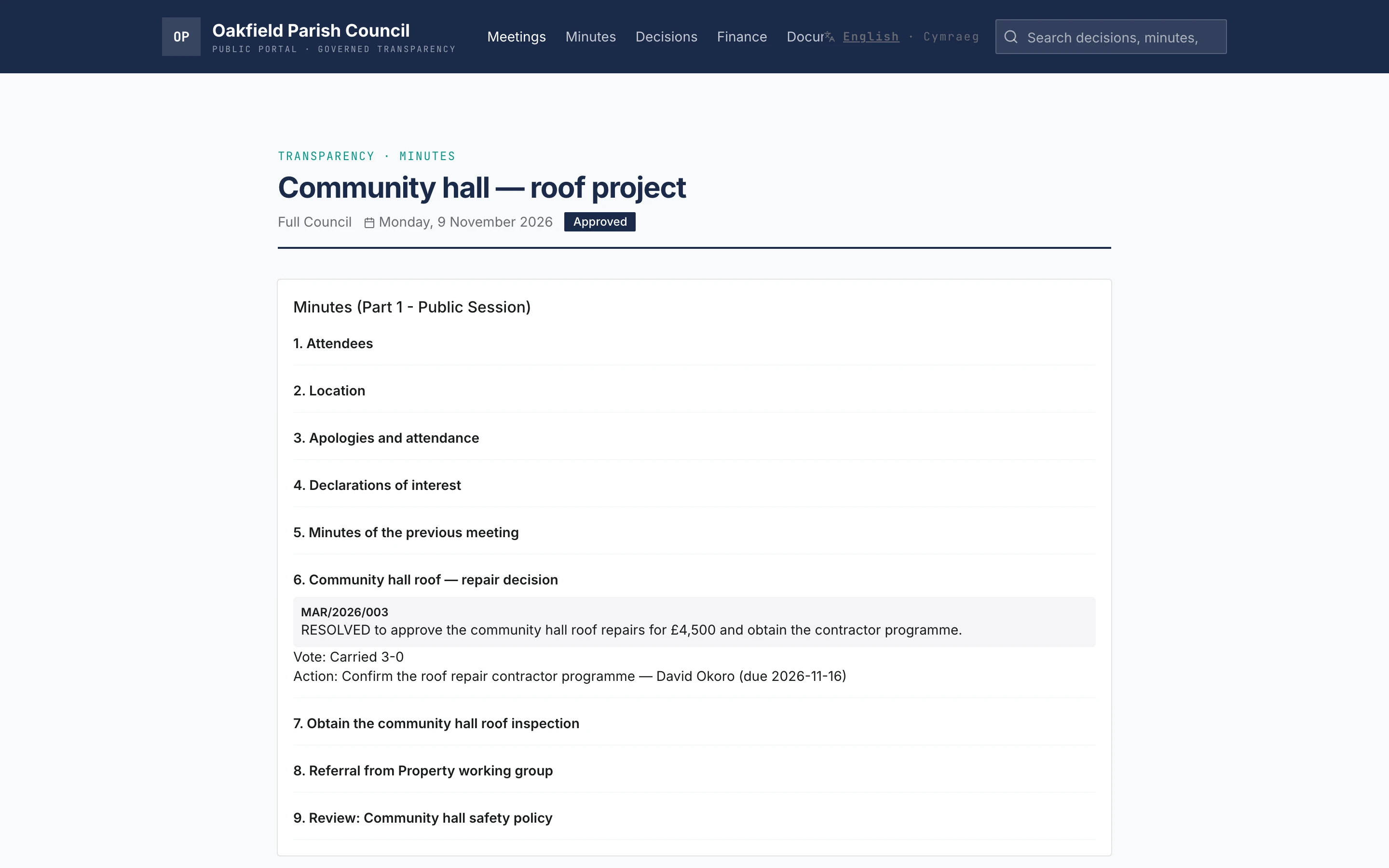
Explore Oakfield’s public demo · no signup
The roof decision stays linked to its action. The owner records progress in the action record. When the clerk assembles the next agenda, eligible overdue or undated open actions return for attention, alongside pending referrals and reviews due. The thread continues beyond the meeting.
Quorate takes on the recurring administration around the council’s work: preparing the business, keeping the meeting record and carrying the next steps forward. The council concentrates on the judgement and the community behind it.
For your organisation
Attach reports to agenda items with page ranges and rotation, mark Part 2, and generate the pack with a cover page, contents and page numbers. The public pack leaves Part 2 out automatically.
Each of the AGAR Section 1 assertions is checked against your budgets, decisions, risk register, asset register and minutes, with a reason shown when one falls short. Generate the evidence report for your internal auditor.
For parish, town and Welsh community councils and drainage boards
A Transparency Code checklist for smaller councils, and a branded public portal on your subdomain, or your own domain on request: agendas, minutes, decisions and documents.
For parish and Welsh community councils
Attendance, quorum, motions, amendments, recorded votes and declarations of interest captured as they happen, then drafted into minutes.
Create an action with its decision, owner and due date. Eligible overdue or undated open actions carry forward when the next agenda is assembled.
Start from the NALC model standing orders template. s.137 spending is checked against the limit for your electorate before a grant is awarded.
Same core workflow; terminology, notice periods and compliance framework set per council type. These defaults follow the organisation type you choose at signup. Your team can configure them.
£99
Per organisation, per year, exclusive of VAT.
Parish and town councils use the standard Quorate plan. Your councillors, committees, member portal and public portal are included, with no per-seat fees.
30-day free trial, no card.
For eligible local-government organisations that need principal-authority functions, including delegated decisions, forward plans and call-in, plus more storage and custom email settings. Bought by purchase order.
£750 a year, exclusive of VAT
Ask about GovernCompare for yourselfQuorate for your organisation
See the product with your organisation’s work in mind. We can walk through the meeting cycle with you.